

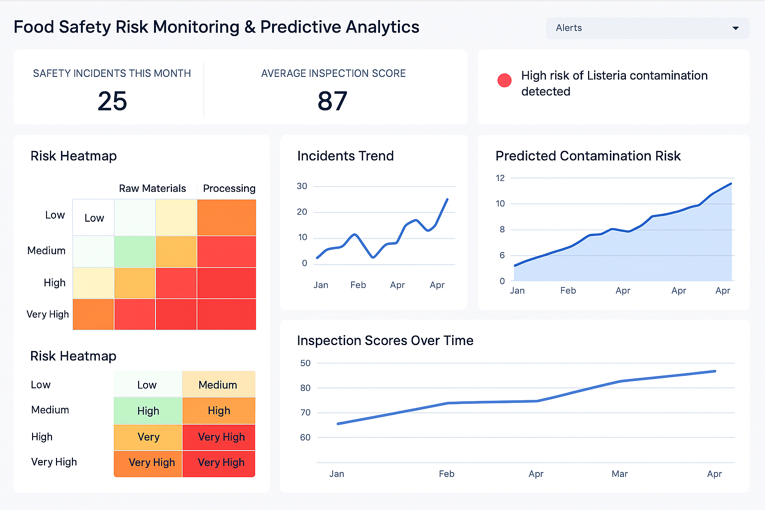
What if foodborne illness outbreaks could be predicted before they happen? Thanks to AI-driven predictive analytics, this is no longer a futuristic idea—it’s a present-day solution. By analyzing large volumes of data from multiple sources, predictive analytics helps food companies forecast safety risks and take action in advance.
Food production environments generate massive amounts of data daily: temperature logs, humidity readings, pH levels, sanitation schedules, supply chain tracking, and more. Traditionally, this information was stored in silos or reviewed after issues occurred. With AI, this data is continuously collected, analyzed, and used to identify patterns that signal emerging threats.
For instance, if a trend of minor temperature deviations is detected in a cold storage area, AI systems can flag the issue and trigger maintenance protocols before a breakdown leads to spoilage. Similarly, if multiple facilities report a spike in bacterial counts under specific conditions, AI models can learn from that and alert other sites facing similar risk factors.
In supply chain monitoring, predictive analytics can trace ingredients back to their origin and identify which vendors, regions, or transportation routes are associated with higher safety risks. This enables companies to adjust sourcing strategies and tighten controls where needed.
AI also plays a crucial role in seasonal and location-based forecasting. For example, based on past data, systems can predict an increase in mold contamination during humid months or a higher risk of Salmonella in poultry during warmer weather. These insights help food safety teams plan resources and adjust protocols proactively.
Importantly, predictive models improve over time. The more data they process, the better they become at detecting subtle signals—like small changes in air quality that may indicate microbial growth or fluctuations in employee hygiene compliance that correlate with contamination events.
Predictive analytics empowers decision-makers with real-time insights. Instead of reacting to problems after they arise, food companies can now stay ahead—protecting public health, reducing losses, and boosting operational efficiency.
The next frontier in food safety is not just detection but prevention powered by data. And predictive analytics is the key to making this shift a reality.
Source: Ms. Nisrine Abou Assi – Food Safety Specialist & Licensed Dietitian