

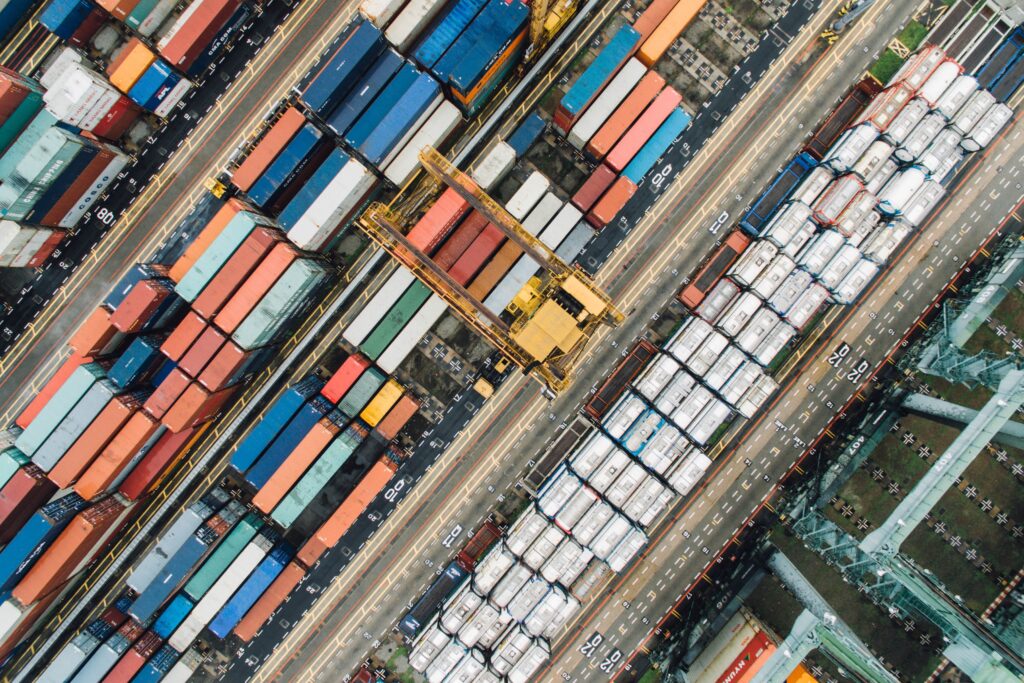
France offers a strategic logistical hub for global trade. Its extensive transportation network earned it 13th place in the World Bank’s 2023 Logistics Performance Index, with an infrastructure score of about 4.0 out of 5. Advanced highways, high-speed rail corridors, and technology-driven freight handling keep goods moving swiftly. Paris Charles de Gaulle (CDG) Airport is Europe’s busiest cargo airport; global freight carriers like Kuehne+Nagel are expanding at Paris-CDG, and industry reports note that Paris-CDG stands alongside Cologne as Europe’s top two air-cargo hubs. On the ground, millions of containers roll off trucks via France’s highway network into the continent.
Maritime routes are equally powerful. French ports handle 90% of the nation’s international trade, contributing over €55 billion to GDP. Key “grands ports maritimes” include:
- Le Havre (Normandy): France’s busiest container port (about 3 million TEUs/year), linked via the Seine to Paris and to 650+ global ports. It is a top hub for containerized food and beverage exports.
- Marseille–Fos (Mediterranean): France’s largest port by tonnage, handling ~60% of France’s hydrocarbons and serving as the gateway to Africa and the Middle East. It is investing in “green” cranes powered by solar to reduce emissions.
- Dunkirk and Nantes–Saint-Nazaire: Handle bulk goods (coal, steel, vehicles) and agricultural exports (e.g. cereals, dairy to West Africa).
Together, these ports form an integrated logistics solution across France’s waterways, highways and railways. As HAROPA (the Le Havre–Rouen–Paris port alliance) manager Jérôme Besancenot observes, these ports handle 125 million tons of cargo a year and the port is at the heart of the supply chain. French logistics firms are also digitizing operations (smart tracking, paperless customs) and “greening” transit (electric trucks, renewable energy hubs) as top priorities.
This robust infrastructure connects France to MENA markets. For example, goods may ship from Marseille through the Suez Canal to North Africa or the Gulf. France’s efficient customs and multimodal hubs make it easy to export French foods, beverages, and industrial goods to Middle Eastern and North African buyers.
Key Points: France’s transport network is world-class – top-ranked infrastructure, major ports (Le Havre, Marseille-Fos), and Paris-CDG (Europe’s busiest air cargo hub) link Europe to Asia and Africa. These systems form the backbone for exporting goods (including food and beverages) to MENA markets.