

As the Middle East and North Africa (MENA) region accelerates efforts to diversify beyond oil, conveyor belt systems are playing an increasingly critical role in driving industrial growth. From mining and manufacturing to food processing, packaging, and clean energy, conveyor technologies are becoming integral to the region’s evolving production ecosystems. The shift toward automation, efficiency, and localized manufacturing is fueling a new era for conveyor systems—especially in countries like Saudi Arabia, the UAE, Egypt, and Turkey.
Recent industry research forecasts steady growth in the Middle East conveyor belts market, with a projected compound annual growth rate (CAGR) of 4.3% through 2026. This momentum is underpinned by rising demand for automated solutions in industrial operations, the expansion of packaging and food processing facilities, and major infrastructure and construction projects. Among product categories, metal-reinforced rubber belts are gaining ground, particularly in heavy-duty industries, expected to grow at 4.6% CAGR. Meanwhile, abrasion-resistant belts are becoming the preferred choice in sectors like construction and mining, anticipated to dominate the market with nearly 38% share by 2026.
The food, electronics, and energy sectors are also influencing belt material and design. Lightweight and medium-weight belts are increasingly favored in cleanroom environments and food-safe operations, posting growth rates of around 5%. Conductive belts—key in electronics and battery production—are rising fast, signaling a broader shift toward conveyor systems that support precision handling and static-sensitive applications.
Mining remains a significant application area, although its overall market share is slowly decreasing. In contrast, the commercial sector is on a strong upward trajectory, with smart warehousing, e-commerce fulfillment, and logistics hubs driving demand for faster, more modular conveyor systems. Saudi Arabia’s Vision 2030, the UAE’s industrial automation push, and Egypt’s mega-projects are reinforcing this trend, as governments and private sector players invest in modern manufacturing and supply chain solutions.
Adding to this momentum is the rise of clean energy and battery storage in MENA. Factories now require conveyor systems capable of handling fragile components like solar cells and fuel cells with precision. Montech Conveyors, for instance, recently introduced its SOLTB belt series—modular conveyors tailored for transporting flat, sensitive items in high-tech production settings. Their vacuum, flat, and toothed belt systems offer ideal solutions for the region’s growing electronics, packaging, and renewable energy manufacturing bases.
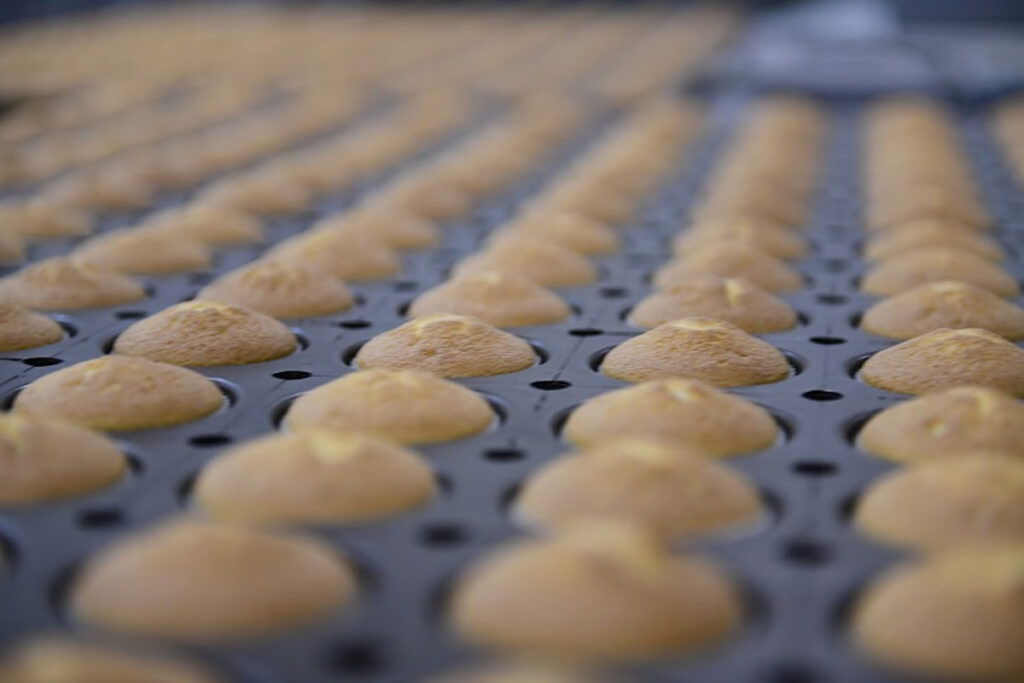
Saudi Arabia’s Almarai offers a local example of this shift in motion. In partnership with Syntegon Technologies, the food giant upgraded its bakery lines with advanced flow-wrapping and depositing systems that ensure gentle product handling and seamless integration with post-baking and secondary packaging conveyors. These upgrades, implemented across facilities in Ha’il and Al-Kharj, underline the growing trend of integrating European-grade automation into Gulf food production.
Complementary innovations in inspection and high-speed packaging are also accelerating. Ishida’s IX-EN-2493-Compact X-ray system now offers non-intrusive, high-speed food inspection without disrupting packaging lines, while Hugo Beck’s servo-driven packaging solutions are boosting output speeds to 10,000 cycles per hour for instant food products. These technologies, when paired with modular conveyors, offer scalable automation for FMCG manufacturers in Egypt, Jordan, and North Africa.
Turkey continues to lead the regional conveyor belt market, accounting for over 35% of MENA’s share, thanks to its manufacturing strength and integration into European supply chains. However, Saudi Arabia is quickly catching up, with its booming mining sector and mega-projects like NEOM driving the country’s conveyor market to the highest CAGR in the region.
Leading global and regional players such as Bridgestone, ContiTech, Fenner Dunlop, Al Kuwaiti Industrial Solutions, and Turkey’s Kale Conveyor are all focusing on digital integration, AI-based predictive maintenance, and sustainable materials. Their goal? To support the region’s shift toward smart, efficient, and environmentally responsible industrial infrastructure.
In today’s MENA landscape, conveyor systems have evolved far beyond simple material handling tools. They are now strategic assets—essential for automating food factories, energizing clean-tech assembly lines, and enabling industrial competitiveness across the board. With governmental support and private sector ambition aligned, conveyor technology is set to play a central role in building the next generation of Middle East industry.