
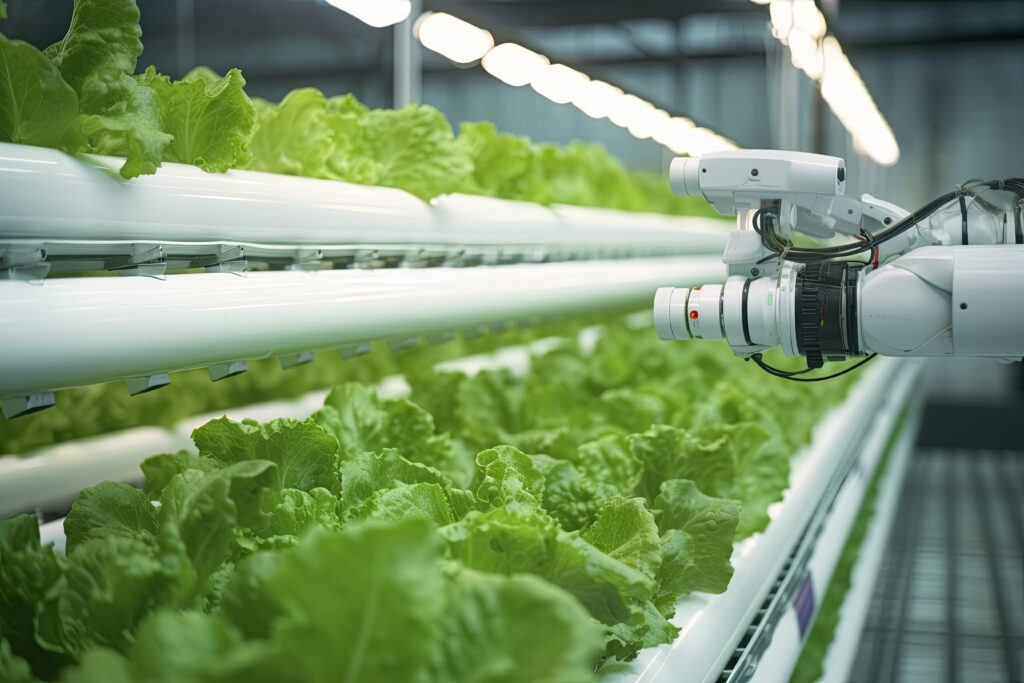
Saudi Arabia is fast becoming an agritech hotspot. The Kingdom imports >80% of its food, so local innovation is vital. Startups and international collaborations are introducing vertical farms, smart greenhouses and alternative proteins to transform the desert into farmland. For instance, the Mitsui–ZERO–Tamimi joint venture Green Dunes opened a 3,500 m² vertical farm near Riyadh in 2024. It uses aeroponic systems to grow greens and herbs, requiring 95% less water than traditional fields. Similarly, pure-harvest greenhouses (backed by state-owned NADEC) deploy hydroponics year-round on rooftops, slashing water use and keeping pesticide-free produce on local shelves.
Plant-based and cultured foods are trending. Saudi FoodTech reports that in early 2025 demand for plant-based meats and dairy substitutes surged as health and sustainability become top-of-mind. Consumers – especially young Saudis – are embracing vegan and low-meat diets. This shift opens new markets for protein-rich crops like chickpeas, lentils and quinoa, which thrive on minimal water. Local entrepreneurs are capitalizing: for example, Jeddah’s Mashkat Agritech uses hydroponic greenhouses to reduce water usage by 90%, and the company PureHarvest is testing lab-grown chicken (pre-market) to cut reliance on imports.
Saudi FoodTech and other incubators are funding this growth. A new Agri-FoodTech Challenge (launching 2025) will crowdsource solutions for arid farming challenges. Partnerships with global leaders abound: Saudi–Netherlands agreements (June 2025) dedicated $114 million to water-smart irrigation and controlled farming tech. Visionary projects like NEOM’s greenhouse (completed in 2025) demonstrate scale: an 800,000 sq-ft farm at Oxagon yields nearly 2,000 tons of veggies annually with 93% less water than open-field farming.
- Emerging FoodTech Trends: Experts cite precision agriculture (sensors, IoT) and AI-driven farming as growth areas. Blockchain is being tested for supply-chain transparency, and lab-based protein is on the radar (though cost remains a hurdle).
- Cultural & Startup Dynamism: Local brands harness heritage ingredients (e.g. date-based snacks and camel-milk yogurts) while using cutting-edge processing. Contemporary Foods, a Riyadh startup, turned Saudi dates into a line of no-sugar energy bars, illustrating how “food tech and [Saudi] heritage” merge.
Overall, the trend is clear: innovation-centric farming. By leveraging arid land and tech, Saudi is seeding a “second green revolution”. As Arab News notes, plant-based diets and year-round indoor farming could position the Kingdom as a regional leader in sustainable food production.